Leash Pulling Isn't A Leash Problem. It's An Attention Problem.
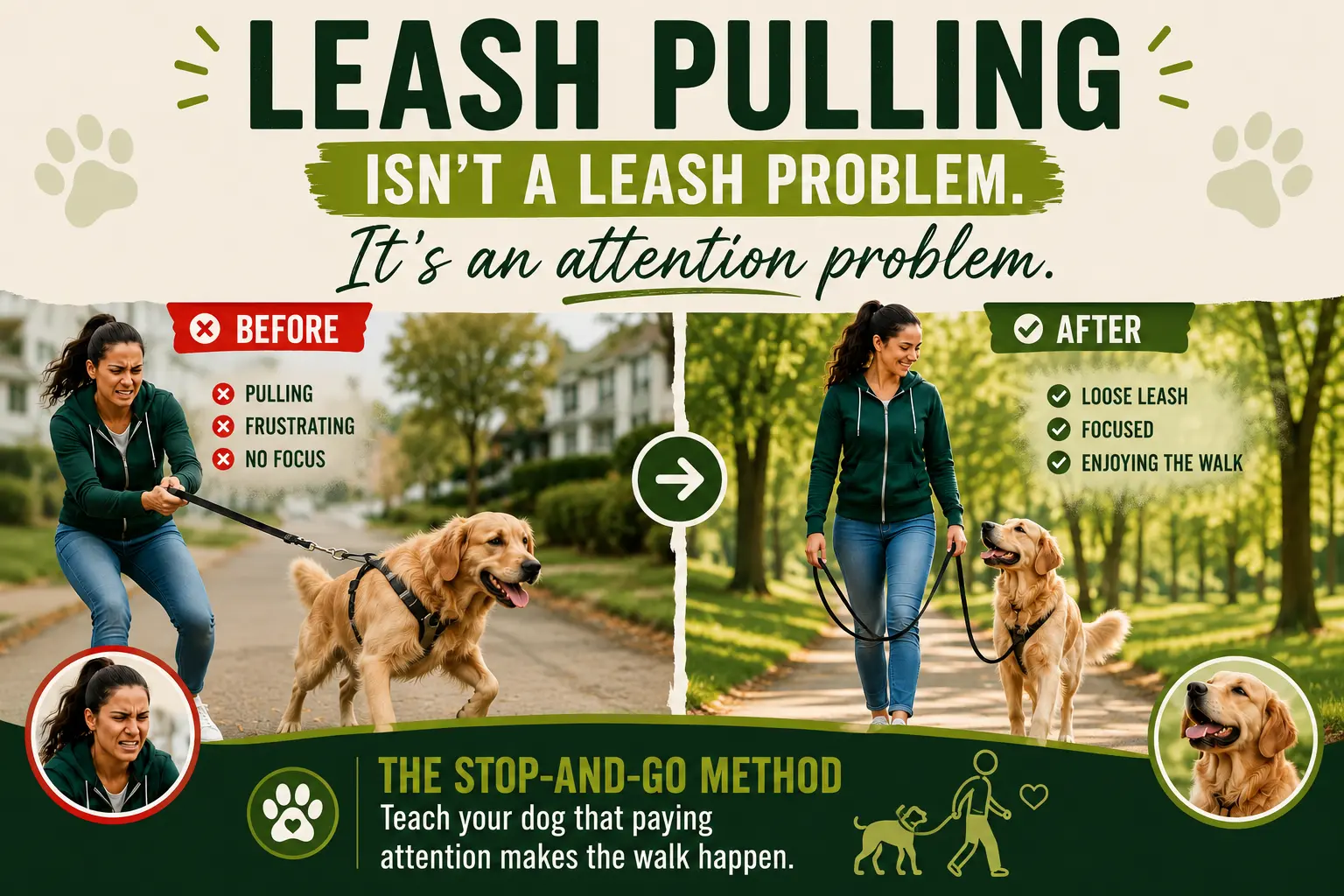
Most owners try harnesses, front-clip leads and correction after correction. The actual fix is simpler: teach your dog that paying attention to you is what makes the walk continue.
The Stop-and-Go Method
🐾 The walk only continues when the leash is loose.
🛑 The moment your dog pulls, stop moving completely — no tugging back, no talking, just a full stop.
✅ The instant the leash slackens, even slightly, keep walking. No cue words needed at first — the pattern itself teaches the lesson.
🔁 Repeated consistently, your dog starts checking in and slowing down on their own, because that's what actually keeps the walk going.
⏱️ It's slower going at first — some early walks turn into a lot of stopping and starting in the first few yards — but it builds a habit that holds up long after you'd normally need a tighter leash or a stronger harness to manage pulling.
🎯 This is one piece of a broader approach service-dog trainers use to build focus and calm in general, not just on leash.
Want the complete method, not just the leash-pulling piece?
See the free workshop from the K9 Training Institute on the full body-language approach professional service-dog trainers use to build focus, calm and obedience in every situation — not only on walks.
Affiliate link — we may earn a commission at no cost to you. See our Affiliate Disclosure.