No-Pull Front-Clip Harness
Gives you more control without added pressure when a trigger appears.
Shop on Amazon →Recognizing true reactivity and building calm around triggers gradually — without corrections, flooding, or guilt.
By Sam Whitfield · Last updated August 2026
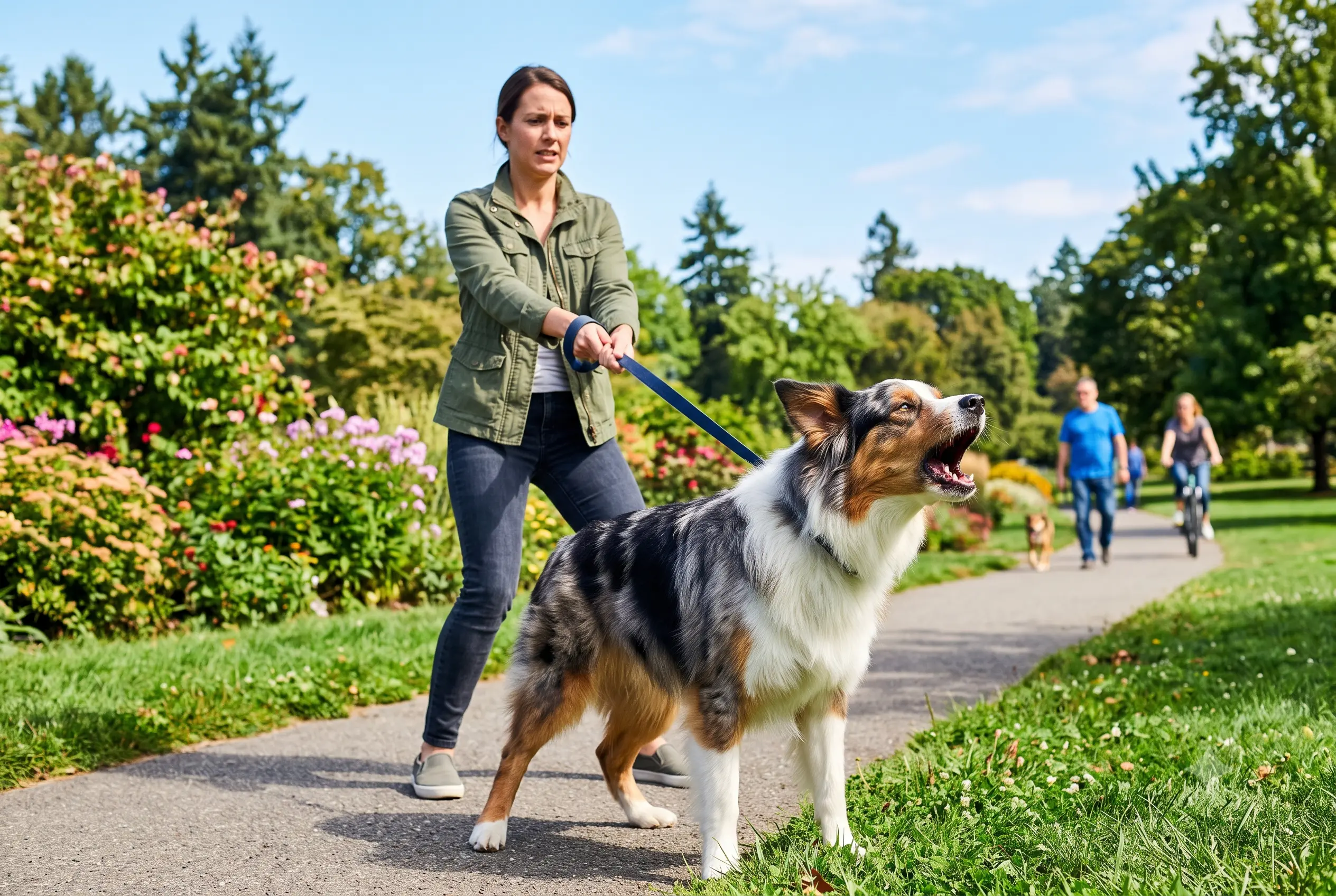
Reactive behavior can feel embarrassing or overwhelming, especially in public. But barking, lunging, or growling at a specific trigger is usually fear or over-arousal, not a dog trying to cause harm — and it responds well to a calm, gradual plan.
Contains affiliate links. See our Affiliate Disclosure.
Reactivity usually shows up as barking, lunging, growling, or even freezing in response to a specific trigger — often other dogs, strangers, bikes, skateboards, or loud vehicles. It tends to happen at a fairly predictable distance from the trigger and settles once the trigger is gone. This is different from true aggression with a bite history, which is a more serious pattern that needs hands-on professional support rather than general guidance like this.
Reactive behavior is usually rooted in fear, frustration, or under-socialization — not dominance or a "bad temperament." A dog who was never fully exposed to bikes or strangers as a puppy, or who had one bad experience with another dog, can develop a strong reaction that looks intense but is really about feeling unsafe or overwhelmed in that moment.
Small stresses build up through the day, even ones that seem unrelated to the trigger itself. A noisy morning, an uncomfortable vet visit, or a missed walk can lower a dog's threshold, so something that wouldn't normally bother them — like a jogger passing at a distance — suddenly causes a big reaction. Recognizing trigger stacking helps you understand why your dog's reactions aren't always consistent.
The most reliable approach is reward-based distance work: find the distance from a trigger where your dog can stay calm and notice it without reacting, and reward that calm attention. Slowly decrease the distance over multiple sessions, only moving closer once your dog is consistently relaxed at the current distance. Avoid corrections, avoid flooding your dog with a trigger they can't handle, and never force closer exposure than your dog is ready for — all of that tends to make reactivity worse, not better.
A few starting points for calmer walks around triggers.
Gives you more control without added pressure when a trigger appears.
Shop on Amazon →Makes it easier to find and hold the distance your dog can stay calm at.
Shop on Amazon →Keeps high-value rewards within reach so your timing stays fast.
Shop on Amazon →Can take the edge off baseline stress while you work on trigger distance.
Shop on Amazon →See how service-dog trainers build calm and confidence around triggers using body language, in a free workshop from the K9 Training Institute.
No. Reactive behavior — barking, lunging, growling, or freezing at a specific trigger — is usually rooted in fear or over-arousal, not a desire to bite or cause harm. True aggression with a bite history is a different and more serious issue that needs professional assessment.
Many reactive dogs improve significantly with consistent, gradual work, though full resolution varies by dog. The realistic goal for most dogs is a much higher tolerance and calmer response around triggers, not necessarily a complete disappearance of the behavior.
Avoiding a trigger entirely can prevent progress, since your dog never gets a safe chance to practice a calmer response. The goal is controlled, gradual exposure at a distance your dog can handle — not forced exposure, and not permanent avoidance either.
If your dog has ever bitten, broken skin, or you feel unsafe managing them around a trigger, stop relying on general online guidance and contact a certified professional trainer or veterinary behaviourist. Reward-based distance work like this guide describes is meant for reactive behavior, not for dogs with a real bite history or safety risk.
Pick one trigger and practice the distance-and-reward method with it this week — find the distance your dog can handle, and reward calm attention there.